
Skin infections are a common reason people visit a dermatologist. They can be caused by bacteria, viruses, fungi, or parasites, and often lead to symptoms like redness, itching, pain, or a rash. People with atopic dermatitis or suppressed immune systems are more prone to skin infections. Early diagnosis and proper treatment can help prevent complications and promote healing.
Below is a guide to the most common types of skin infections we treat.
Examples of Bacterial Skin Infections
- Impetigo: Common in children, causes red sores that break open and form honey-colored crusts, easily spread by contact
- Cellulitis: Red, swollen, and tender skin. May be accompanied by fever. Requires prompt medical attention
- Folliculitis: Infection of hair follicles, Looks like small, red pimples or white-headed bumps, Can occur after shaving or in hot tubs
Below is a guide to the most common types of skin infections we treat.
Viral Skin Infections – Viruses can cause rashes, blisters, and other skin changes.
- Herpes Simplex (Cold Sores and Genital Herpes): Painful blisters on the lips or genitals. Often triggered by stress or illness. May recur periodically

- Shingles (Herpes Zoster): Reactivation of the chickenpox virus. Painful rash that appears on one side of the body. Often includes burning or tingling before a rash appears. Prompt treatment with antivirals is key to preventing long lasting nerve pain.
- Warts: Caused by the human papillomavirus (HPV). Firm, rough growths that may appear on hands, feet, or genitals
- We treat in-office by paring down the wart to the root and deeply freezing the base. Continued home treatment is recommended.
8 precautions that can help prevent warts
It can be difficult to prevent warts completely. The virus that causes warts, human papillomavirus (HPV), is found everywhere. However, by taking some precautions, you can reduce the likelihood of you and your family getting warts.
For fewer warts, make sure everyone in your home follows these dermatologist-recommended precautions:
- Avoid touching someone’s wart and wash your hands after treating a wart. HPV is contagious. It’s possible for the virus to get inside your body through a cut or scratch, which can cause a wart.
- Clean and cover cuts and scrapes. HPV is everywhere. Covering cuts and scrapes can reduce your chance of HPV getting in and causing a wart.
- Make sure that everyone in your home has their own towels, washcloths, razors, nail clippers, socks, and other personal items. If someone in your home has a wart, this helps prevent the virus that causes warts from spreading from one person to another.
- Wash your hands often. Because HPV is so common, this helps to remove the virus from your skin.
- Prevent dry, cracked skin. When skin is cracked and dry, it’s easier for HPV to slip in through a crack in your skin, which could cause a wart.
- Stop nail biting and cuticle chewing. When you bite your nails or cuticles, it causes tears in the skin, including some that are too tiny to see. These openings make it easier for HPV to get inside your body.
- Wear flip-flops or pool shoes in locker rooms, pool areas, and public showers. HPV thrives in warm, moist areas. When your skin is moist and soft, it’s easier to get infected with HPV.
- Treat hyperhidrosis. This is a medical condition that causes people to sweat excessively. When people sweat frequently, their skin becomes damp and soft. Having damp, soft skin may increase the risk of getting HPV infection, which could lead to a wart.
- Molluscum Contagiosum: Small, dome-shaped bumps with a central dimple. Often seen in children. Usually self resolves but can persist for over a year.

Fungal Skin Infections – thrive in warm, moist areas and can appear in different parts of the body. Usually have a ringlike appearance due to the active leading edge with central clearing.
- Athlete’s Foot (Tinea Pedis)

- Ringworm (Tinea Corporis)
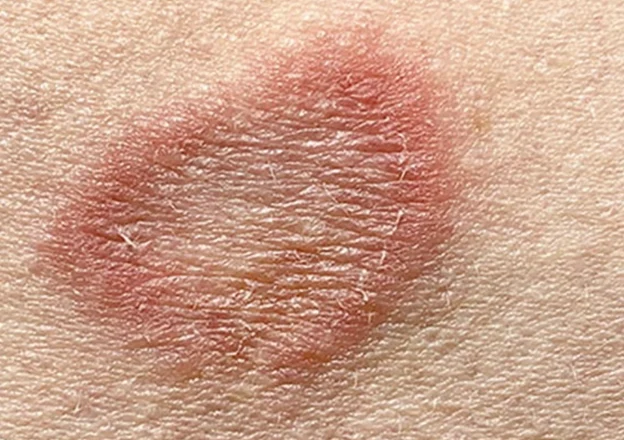
- Jock Itch (Tinea Cruris)

Parasitic Skin Infections
- Scabies: Caused by tiny mites that burrow into the skin can be identified with a dermatoscope and checked for under the microscope. It is associated with intense itching, especially at night. Small red bumps and thin lines (burrows) may appear between fingers, wrists, or waistband area. It is highly contagious but not everyone responds with the same itch reaction!
Lice (Pediculosis)
- Head, body, or pubic lice: Itchy scalp or skin, visible tiny bugs or eggs