

A thorough examination with dermoscopy to spot concerning moles or lesions and detect skin cancers, even at early stages.
Removal of a small skin sample for laboratory analysis to diagnose skin conditions or cancer.
Surgical removal of non-cancerous cysts or fatty lumps, restoring appearance and preventing further growth.

Procedure to repair torn, stretched, or split earlobes caused by trauma, injury, or heavy earrings.

Collecting skin samples to identify bacterial, fungal, or viral infections and guide targeted treatment plans.

Precise technique removing skin cancer layer by layer, preserving healthy tissue and ensuring complete cancer removal.

Destruction and removal of abnormal skin growths using electric current and scraping, minimizing recurrence risk.

Quick, minimally invasive procedure safely removing harmless skin tags or benign lesions for improved comfort.
Freezing pre-cancerous, sun-damaged skin lesions using liquid nitrogen to prevent progression to skin cancer.
What six common skin conditions look like, what causes them, whether they spread, and how they’re treated. Choose a photo to read more.
Herpes zoster
A painful, blistering rash caused by the chickenpox virus waking up again, years after the original infection.
Anyone who has had chickenpox carries the varicella-zoster virus for life. It stays dormant in nerve cells near the spinal cord and brain. Shingles happens when the virus reactivates and travels along a nerve to the skin. Roughly one in three people in the United States will have shingles at some point.
Why the virus wakes up isn’t always clear, but it becomes more likely as the immune system naturally weakens with age, during serious illness or high stress, and with medicines that suppress immunity.
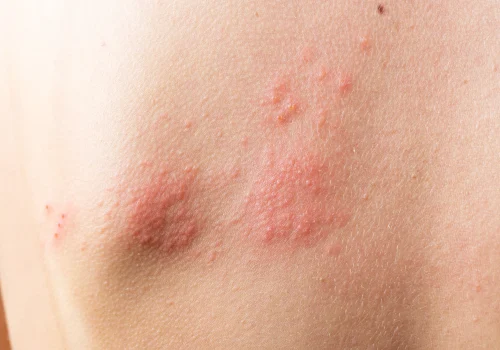
Shingles usually starts with pain, burning, tingling, or itching in one area, often one to five days before anything shows. Then a red rash appears and turns into clusters of fluid-filled blisters, much like the photo.
The giveaway is its shape and location: the rash almost always stays on one side of the body, in a stripe or band that follows a single nerve. The torso is most common, wrapping around from the spine toward the chest, but it can also affect the face, neck, or a limb. Over 7 to 10 days the blisters break and crust over. Some people also feel tired, feverish, or have a headache.
You can’t catch shingles from someone with shingles. But until the blisters have crusted, direct contact with the fluid can pass the virus to someone who has never had chickenpox or the chickenpox vaccine, and they would develop chickenpox. Keeping the rash covered and washing hands lowers that risk. Take extra care around pregnant people, newborns, and anyone with a weakened immune system.
Antiviral medicines such as acyclovir, valacyclovir, and famciclovir can shorten the illness and make it milder. They work best when started within about 72 hours of the rash appearing, which is why it’s worth seeing a doctor quickly rather than waiting.
Pain relief ranges from over-the-counter medicines to prescription options for more severe nerve pain. At home, cool compresses, calamine lotion, loose clothing, and keeping the rash clean and dry can help it feel better while it heals.
The most common complication is postherpetic neuralgia: nerve pain that continues for months, sometimes longer, after the rash clears. It becomes more likely with age. Shingles near the eye can damage vision and needs urgent care. Less often, the rash becomes infected with bacteria, or shingles affects hearing, balance, or facial movement.
A two-dose shingles vaccine is recommended for adults 50 and older, and for adults 19 and older with weakened immune systems. It is highly effective at preventing shingles and postherpetic neuralgia, and it’s recommended even if you’ve already had shingles.
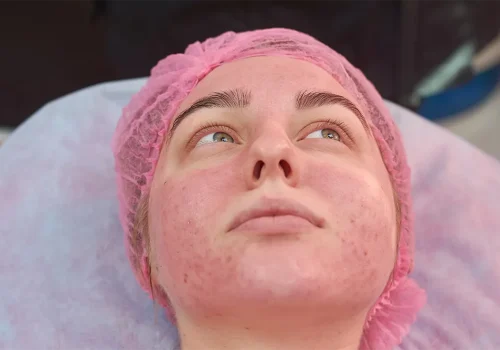
A chronic facial skin condition
Long-lasting redness and flushing across the center of the face that tends to flare and settle in cycles.
Rosacea is a common inflammatory skin condition that mainly affects the cheeks, nose, chin, and forehead. Its exact cause isn’t fully understood. Researchers believe it involves an overactive immune response, sensitive blood vessels and nerves in the face, genetics, and possibly tiny Demodex mites that normally live on skin.
Rosacea is not caused by poor hygiene, and it is not contagious. It’s often mistaken for acne, sunburn, or simply having a ruddy complexion, so many people live with it for years before it’s diagnosed.
It usually begins with frequent flushing or blushing that lingers longer than it should. Over time, redness can become persistent, as in the photo. Other signs include:
On darker skin, redness can be harder to see. Warmth, stinging, bumps, and dusky or brownish discoloration may be the more noticeable signs.
Triggers vary from person to person, and learning your own is one of the most useful things you can do. The most frequently reported are sun exposure, heat and hot baths, hot drinks, alcohol (especially red wine), spicy food, emotional stress, strenuous exercise, wind and cold, and some skin or hair products. A simple diary of flares and what came before them can reveal patterns within a few weeks.
There’s no cure, but rosacea is very treatable, and the right plan depends on which symptoms bother you most.
For bumps and spots, doctors commonly prescribe creams or gels such as metronidazole, azelaic acid, or ivermectin, sometimes alongside a low-dose oral antibiotic like doxycycline, which is used for its anti-inflammatory effect. For persistent redness, brimonidine or oxymetazoline creams can temporarily narrow blood vessels. Visible vessels and long-standing redness often respond well to laser or intense pulsed light treatments. Eye symptoms may need their own treatment, sometimes with an eye doctor.
Daily broad-spectrum sunscreen of SPF 30 or higher is one of the most effective steps, since sun is a leading trigger. Mineral sunscreens with zinc oxide or titanium dioxide are often better tolerated. Use a gentle, fragrance-free cleanser and moisturizer, rinse with lukewarm water, and pat dry rather than rubbing. Avoid scrubs, alcohol-based toners, and harsh exfoliants. Test new products on a small patch first.
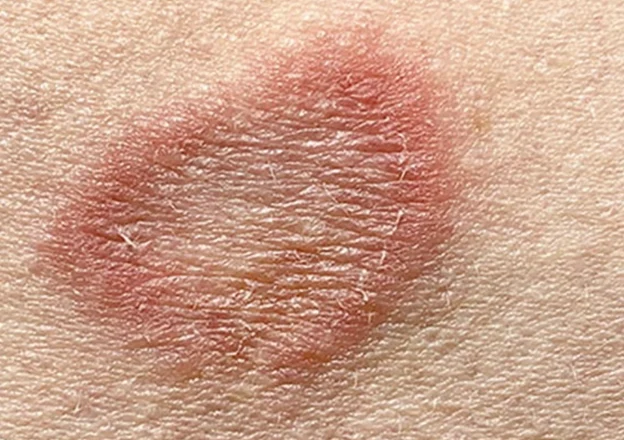
Tinea corporis
A common fungal skin infection that forms an itchy, ring-shaped patch. Despite the name, no worm is involved.
Ringworm is caused by dermatophytes, a group of fungi that feed on keratin, the protein in skin, hair, and nails. The same family of fungi causes athlete’s foot and jock itch. The name comes from the ring-like shape the rash often takes as it spreads outward.
A typical patch is round or oval, with a raised, red, scaly edge and a center that is often clearer or closer to normal skin, like the photo. It’s usually itchy and slowly grows outward. You may have one patch or several, and they can merge. On brown and black skin the patches may look gray, brown, or purplish rather than red.
Several other conditions, including eczema and psoriasis, can form round patches too, so it’s worth having a new rash checked if you aren’t sure.
Ringworm passes easily through direct skin-to-skin contact, and from cats and dogs (kittens and puppies especially), sometimes farm animals. It also spreads through shared towels, clothing, bedding, hairbrushes, and surfaces like gym mats and locker room floors. Warm, damp, sweaty skin gives the fungus an advantage.
Most body ringworm clears with over-the-counter antifungal creams such as clotrimazole, miconazole, or terbinafine. Apply a thin layer to the patch and a little of the skin around it, usually once or twice a day as the package directs.
The most common mistake is stopping too soon. Keep using the cream for 1 to 2 weeks after the skin looks clear, because the fungus can remain when the rash has faded. If there’s no improvement after two weeks, the rash is widespread, or it’s on the scalp or in nails, prescription antifungal tablets may be needed.
Avoid steroid creams like hydrocortisone unless a doctor recommends them. They can calm the redness while letting the fungus spread and change the rash’s appearance, which makes diagnosis harder.
Wash hands after touching the rash or a pet. Don’t share towels, clothes, or brushes. Wash bedding and towels in hot water, and keep skin clean and dry, especially after sports. If a pet has patchy hair loss, take it to a vet so it doesn’t keep reinfecting the household. Wear sandals in shared showers and locker rooms.
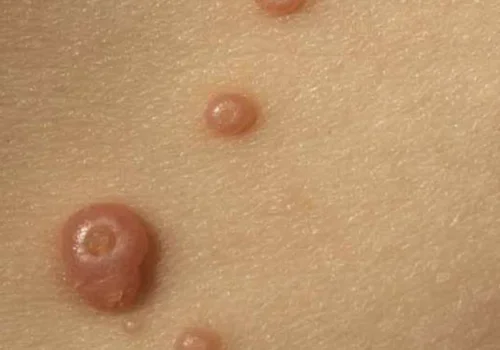
Molluscum
Small, smooth, pearly bumps caused by a harmless virus. Common in children, and it clears up on its own.
Molluscum contagiosum is a skin infection caused by a poxvirus that only affects the top layers of skin. It’s very common in young children and is not dangerous. Adults can get it too, and in adults bumps in the genital area are usually passed on through sexual contact.
The bumps are small, usually 2 to 5 millimeters across, firm, smooth, and dome-shaped. They’re often skin-colored, pink, or pearly white, and many have a tiny dimple in the center, as you can see in the photo. That dimple is one of the most recognizable features.
They can appear anywhere except the palms and soles, often on the trunk, arms, legs, and in skin folds like armpits and behind the knees. There may be a few or dozens. They’re usually painless but can itch.
The virus spreads by touching the bumps, and through shared towels, bath toys, clothing, and gym or swimming equipment. It also spreads on the same person: scratching or picking a bump can carry the virus to new skin, which is why bumps often appear in lines or clusters. Children with eczema tend to get more bumps because their skin barrier is weaker and itchier.
Children can generally keep going to school, daycare, and swimming. Covering visible bumps with clothing or a waterproof bandage and not sharing towels helps protect others.
Each bump typically lasts a couple of months, but new ones keep appearing for a while, so the infection as a whole often lasts 6 to 12 months and occasionally up to several years.
Near the end, bumps often become red, swollen, and crusty for a week or two. This can look like an infection, but it usually means the immune system has recognized the virus and is clearing it. Bumps normally heal without scarring, especially if they aren’t picked.
Because it goes away by itself, many doctors recommend simply waiting, particularly for young children. Treatment may be worth considering if bumps are numerous, spreading, itchy, in the genital area, or causing distress.
Options a doctor can offer include freezing (cryotherapy), gently scraping bumps away (curettage), and prescription topical treatments, including cantharidin applied in the office and berdazimer gel used at home. These can cause blistering or irritation and may need repeat visits. Don’t try to squeeze or cut the bumps yourself, as this spreads the virus and can cause scarring or infection.
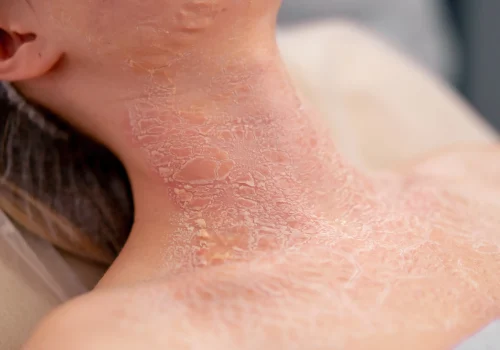
Atopic dermatitis
Dry, itchy, inflamed skin that comes and goes in flares. It’s one of the most common skin conditions in the world.
Atopic dermatitis, the most common type of eczema, happens when the skin’s protective barrier doesn’t work as well as it should and the immune system over-reacts. The skin loses moisture easily and lets in irritants and allergens more readily, which leads to dryness, inflammation, and intense itch.
It often runs in families and frequently appears alongside asthma, hay fever, and food allergies. Many children improve as they grow older, but it can continue into adulthood or begin later in life.
Itch is the defining symptom, and it can be severe enough to disturb sleep. Affected skin is dry, rough, and scaly, and during flares it can become swollen, cracked, or weepy, as on the neck in the photo. Scratching over time can thicken the skin and make its lines deeper.
In babies it often appears on the cheeks, scalp, and outer arms and legs. In older children and adults it favors the inner elbows, backs of knees, neck, hands, wrists, and eyelids. On darker skin tones, eczema may look purple, brown, or gray rather than red, and it can leave patches that are lighter or darker than surrounding skin for a while after healing.
Scratching brings brief relief but damages the skin barrier further, which increases inflammation and makes the itch worse. Breaking this cycle is central to managing eczema. Keeping nails short, pressing or patting instead of scratching, applying a cool compress, and treating flares early all help.
Frequent triggers include harsh soaps and detergents, fragrance, wool and scratchy fabrics, sweat and heat, dry winter air, long hot showers, stress, and in some people dust mites, pet dander, or pollen. Triggers vary, so tracking flares can help you identify yours.
Moisturizing is the foundation of eczema care, even when skin looks clear. Thick, fragrance-free creams and ointments work better than thin lotions. Take short, lukewarm baths or showers with a gentle, soap-free cleanser, pat the skin nearly dry, and apply moisturizer within a few minutes to lock in water. Many people find applying moisturizer twice a day or more makes a real difference. Choose soft cotton clothing and fragrance-free laundry products.
Flares are commonly treated with topical corticosteroids, which come in different strengths for different body areas. Non-steroid options include calcineurin inhibitor creams such as tacrolimus and pimecrolimus, and newer creams like crisaborole, ruxolitinib, roflumilast, and tapinarof.
For moderate to severe eczema that doesn’t respond well enough to creams, doctors may recommend light therapy, injectable biologic medicines such as dupilumab, tralokinumab, or lebrikizumab, or oral JAK inhibitors. Used as directed, topical steroids are safe and effective, and worry about them is a common reason flares go under-treated. Ask your doctor how much to use and for how long.
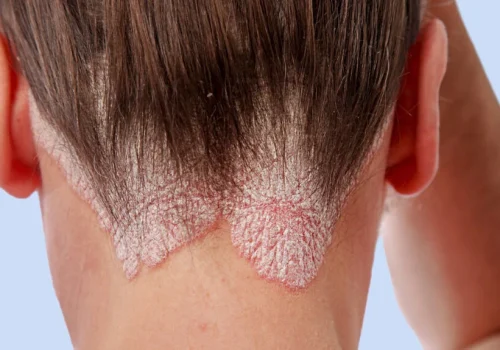
A form of plaque psoriasis
Thick, well-defined patches of silvery scale on the scalp, often spreading past the hairline onto the neck and behind the ears.
Psoriasis is an immune-mediated condition in which the immune system speeds up the growth of skin cells. Instead of shedding over about a month, cells pile up in days, forming raised, scaly patches called plaques. About half of people with psoriasis have it on their scalp, and for some the scalp is the only place it appears.
It tends to run in families. It is not contagious and is not caused by poor hygiene.
Scalp psoriasis causes red or pinkish plaques covered with thick, silvery-white scale. The patches have clear edges and frequently extend beyond the hairline onto the forehead, the back of the neck, as in the photo, and behind or inside the ears. On darker skin, plaques may look purple, dark brown, or gray, with gray scale.
Other symptoms can include itching, dryness, burning, flaking that looks like heavy dandruff, and temporary hair shedding from scratching or forcibly removing scale. The hair usually grows back once the skin is treated.
It’s often confused with seborrheic dermatitis. Psoriasis plaques tend to be thicker, drier, and more sharply outlined, while seborrheic dermatitis usually has greasier, yellowish flakes. A dermatologist can tell them apart.
Flares can be triggered by stress, infections such as strep throat, injury to the skin including scratching, cold and dry weather, smoking, heavy alcohol use, and certain medicines such as lithium or beta blockers. Never stop a prescribed medicine without talking to your doctor first.
Psoriasis affects more than skin. Up to about 30 percent of people with psoriasis develop psoriatic arthritis, which causes joint pain, stiffness, and swelling, often in the fingers, toes, or lower back. Early treatment helps protect the joints. Psoriasis is also linked with higher risk of heart disease, diabetes, and depression, so it’s worth mentioning to your primary care doctor as well as a dermatologist.
Treatment usually works in two steps: softening and lifting scale, then treating the inflammation underneath. Medicated shampoos containing salicylic acid or coal tar help loosen scale. Prescription options include corticosteroids made for the scalp as solutions, foams, shampoos, or sprays, and vitamin D-based treatments like calcipotriene, which are often combined with a steroid.
When psoriasis is widespread or doesn’t respond to topical treatment, a dermatologist may suggest light therapy or medicines that work throughout the body, including methotrexate, apremilast, deucravacitinib, or injectable biologics that target specific parts of the immune system. Many people achieve clear or nearly clear skin with modern treatment.
Be gentle. Don’t pick or scratch off scale, which can cause bleeding, infection, and new plaques. Apply treatments directly to the scalp by parting the hair, not just to the hair. Use a wide-tooth comb gently, and limit heat styling and harsh chemical treatments during flares. Oil treatments left on for a time before washing can help soften thick scale.
This guide is for general education and isn’t a substitute for advice from a doctor or dermatologist. Many skin conditions look alike, so have a new or changing rash checked by a professional.
We treat a wide range of conditions including acne, eczema, psoriasis, rosacea, skin infections, hair loss, nail disorders, rashes, and skin cancer. We also specialize in complex dermatologic diseases and preventive skin checks.
In most cases, no referral is needed. However, some insurance plans may require one. Please check with your insurance provider or call our office at (808) 495-0906 for assistance.
Everyone can benefit from routine skin checks, but they are especially important if you:
Mohs surgery is a precise technique for removing skin cancer layer by layer, examining each under a microscope until all cancerous cells are gone. It offers the highest cure rate and preserves the most healthy tissue.
Mohs is typically recommended for skin cancers on the face, ears, scalp, hands, or other sensitive areas; for aggressive cancers; or for those that have recurred after prior treatment.
Most cases are completed in 2–4 hours, depending on the size and complexity of the tumor. You’ll be at our office for the entire process, including any reconstruction if needed.
During this time, for your comfort, please wear comfortable layered clothing and bring something to do and/or eat.
Yes, any skin surgery leaves a scar, but our team takes great care with closures to minimize scarring and preserve appearance. We also offer post-surgical scar care options if needed.
It’s important to monitor your skin regularly for any changes. Warning signs of skin cancer include:
These signs can indicate melanoma or non-melanoma skin cancers such as basal cell or squamous cell carcinoma.
You can request an appointment online by clicking Book My Appointment, or call us at (808) 495-0906.
We offer private and secure video visits for many of our services. No commute needed and no downloads required.
We’re located at 500 Ala Moana Blvd, Bldg 4, Suite 470, Honolulu, HI 96813, in Kaka’ako.
Please bring a valid photo ID, your insurance card, a list of medications, prior records, and any referral forms (if required). For new patients, arriving 10–15 minutes early is recommended.
We are committed to making our care accessible and convenient for our patients. We currently accept the following insurance plans:
If your plan isn’t listed, we encourage you to call our office—our team can help verify your coverage and explore your options. We are continually expanding our network and adding new insurance partners, so check back often for updates.
Most medical dermatology services are covered by insurance, but your out-of-pocket costs will depend on your specific plan. Cosmetic procedures are generally not covered.
Any procedures performed in our office are typically considered surgical by insurance companies and may be subject to deductibles or co-insurance—even if they seem minor. These may include:
Please note that lab and pathology fees are considered separate and will be charged by that service provider. We’ll help verify your coverage and provide an estimate before treatment whenever possible. If you have any questions about your insurance or costs, our staff is happy to assist you.
Still have questions?Our team is happy to help you plan your visit.
Have questions or ready to start your skincare journey? We’re here to help.
Reach out to our team or book your consultation today.
808-229-2605
808-495-0906
808-201-6317
info@wfderm.com
Everything you need for a smooth, stress-free visit.
Monday – Friday
8:30 a.m. – 4:00 p.m.
Closed for lunch 12:00 – 1:00 p.m.
Saturday – Sunday
No clinic

If you’re not already a Metropolis member, please sign up before your visit at app.metropolis.io, or scan the QR code.
Sign up with MetropolisFor help with registration or validation, use the Pohukaina Street entrance, where a gate attendant can assist you.
 Scan to sign up
© 2026 Waterfrontderm| Privacy Policy | Terms of Use